by James Brown
•
21 March 2021
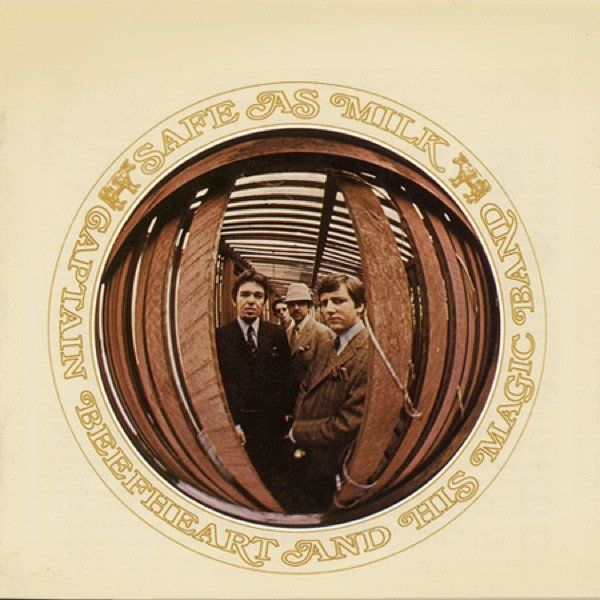
As is often the case, most people can remember where they were when they first heard a record which made a great impact upon them. I'll always associate this album with the smell of a soldering iron. I listened to the album almost consistently for days as I experimented with my first small box amp for my first electric guitar. It had started to wobble a bit, so I opened it up and started soldering bits and pieces together which I thought had come loose. It was a strange experience being in a little outhouse which housed the washing machine and where my Mam always did the ironing. The room filled with plumes of soldering smoke on this occasion as I diligently put my nutty professor hat on. I can still always smell this album even now, as well as hear it! I first bought it on one of those 'Castle Communications' doubles which housed the album 'Mirror Man' on the reverse side of the cassette. It's a strange coincidence that I'd only just watched the absolute classic 'Paris, Texas' film a couple of weeks before and actually bought the soundtrack along with Safe As Milk not realising until many months later that Ry Cooder himself had been such an influence in the Magic Band itself in 1966/67 and was in fact cajoled into joining by Don Van Vliet aka Captain Beefheart to formulate and be a musical director for the debut album. Ry Cooder was already playing with Taj Mahal in the Rising Sons at the time of recruitment. From the very first track Sure 'nuff 'n Yes I Do, frizzing slide guitar from Ry Cooder propels the track into a frenetic incessant blues riff and rhythm with Beefheart's vocal sounding as though he'd just come gurgling up for air from a muddy burbling swamp. A clarion call, an amalgamation of the older times of juke joints, dustbowls and Mississippi voodoo with avant garde 60's counterculture and dropout psychedelia. As his Magic Band were thus aptly named Magic, thus it be so. I remember the first 3 tracks captivating me and exciting me as easy as the wind blows as I was already well accustomed to hearing acoustic and electric blues, jazz, r and b and 60's psychedelia. The 4th track however 'Dropout Boogie' gave me an inkling that something altogether different was going on, with Beefheart's vocal getting more deeper, more off kilter, more sonorous by the minute and the so called 'dropout boogie' instrumental breaks which took me by surprise with it's cool marimba playing along with overblown distorted guitar playing the riff alongside, hypnotic and bewildering in equal measure, this in my mind was the start of my good 'Captain' adventure proper, which has stood me in good stead from then on in; either that or the soldering iron smoke was beginning to take effect as swirls of the stuff escaped in waves out of the gaps around the old cobwebbed window frame. It seems just a stones throw away from when I first left school and started a college course with a new group of mates, 3 of us out of 5 often talked about music and the student union college jukebox contained a selection of old and new, such as Simple Minds, The Beatles, The Jam, The Stranglers, Pink Floyd, The Jesus and Mary Chain, Blondie, Jackie Wilson, The Smiths, The Clash, The Who, The Bangles, The Fall, The Housemartins, The Psychedelic Furs, Ben E King, Squeeze, The Beastie Boys, U2, Peter Gabriel and Kate Bush, The Cure, etc.. and was often heard pumping out tracks such as Promised You A Miracle, Strawberry Fields Forever, Start, Golden Brown, Another Brick In The Wall, April Skies, Heart Of Glass, I Get The Sweetest Feeling, Heaven Knows I'm Miserable Now, Should I Stay Or Should I Go, Kid, Pinball Wizard, Walk Like an Egyptian, There's A Ghost In My House, Happy Hour, Pretty In Pink, Stand By Me, Cool For Cats, Fight For Your Right, Sunday Bloody Sunday, Don't Give Up, Why Can't I Be You respectively...all of these I remember were popular college anthems and regularly got extended air time on the juke box mix at the time, more often than not, over a consistent murmuring hum of hormonal teenagers. However the week after my Beefheart initiation, with Safe As Milk my new favourite record, I happened to mention I was really into this band called Captain Beefheart and his Magic Band. The reaction was borderline piss take. Captain who? Beef fart?? What the hell is that?? For a few weeks after whenever the time struck a chord with music downtime conversations from classes they now often finished with a lighthearted 'beef fart' exclamation upon my leaving! This attitude at that tender self conscious age got to me slightly, especially that none of them seemed to take me up on the challenge of even borrowing my tape to actually hear it. This was well before Google I might add! At the age of 16 what it did was make me even more resolute on my Captain Beefheart mission. Over the next month or so I bought Clear Spot, The Spotlight Kid and then Trout Mask Replica just to absolutely piss them all off even more, even if it was only in my own head and none of them were even aware of my personal call to arms!! I never mentioned 'Beef fart' again after that and decided it was their loss and my gain. To quote the good captain himself, "I’d never just want to do what everybody else did. I’d be contributing to the sameness of everything.” Captain Beefheart Electricity was the track on the album that apparently when the bands then record label boss of A&M in 1966 heard it he dropped the band off the label altogether, describing it as far too downbeat and too negative. Subsequently a change of label then to Buddah under the guidance of Bob Krasnow and Safe As Milk eventually got its release in 1967 with many famous musicians heralding it, including John Lennon, who said it was his favourite album of 1967. ( Being a Beatles fan and after reading this, I decided to check the album out for myself, forever thanks John!) Electricity, another mighty stand out track then amidst it's own overdriven theremin haze. Its squirming powerful mirk sees the light as Beefheart sings or even performs an exorcism, producing a vocal from somewhere deeper than night, the bones of the great Howlin' Wolf himself might still easily shiver to. "Singin' through you to me Thunderbolts caught easily Shouts the truth peacefully Electricity......" The album seems to quicken pace as Yellow Brick Road with its syncopated rhythm catapults the momentum of the album after the opening spoken studio statement knocks the listener off kilter once again. "The following tone is a reference tone, Recorded at our operating level" Always an early favourite track of mine from the album, it seemed to encompass just what Beefheart was about, something you just can't put your finger on; classic 60's garage psych rock, whimsical psychedelia, avant garde meandering, explosive raw vocals, seemingly 'off the cuff' lyrics, spaced out whilst having its feet firmly planted in earthly blues and soul all with a twisted backdrop of haunted nursery rhymes and half forgotten dreams. A journey into itself, always turning a corner to another surprise, chopping up the rhythm and regaling in Beefheart's persona changeling vocal. "Keeping on walkin' n don't look back" to the next shift... "Around the corner the wind blew back... ." and onwards it goes... This could more or less be a reflection on the album as a whole. At times pulling you in to safety then pushing you over the edge, again and again. Never letting the listener rest on their laurels and it's all the better for that. If someone were to listen to one track in isolation like the plaintive soul driven James Brown 'esq' ballad of I'm Glad for example followed by the previously mentioned mammoth of Electricity, they might struggle to comprehend they are tracks from the same album. To call the album a smorgasbord of delights might not easily rest with the sum of all its influences. But if someone were to check out the original Grown So Ugly by Robert Pete Williams released in 1961 they could harness the history of the blues going way back to Blind Lemon Jefferson, then all the way forward to The Black Keys and The White Stripes. Some true nuggets of the marvelous underground rumblings of punk can be heard in the album that can also be heard materialising in elements of The Stooges, Television years later with The Fall, Public Image Limited and The Pop Group to name but a mere few. Safe as Milk is rightly so considered to be one of Captain Beefheart's more accessible albums, along with the superb Clear Spot and The Spotlight Kid in comparison to the seminal Trout Mask Replica for example. However this accessibility doesn't dampen the downright essential nature of it all. Once you've started on the journey with Captain Beefheart and his Magic Band then likely you'll be there for the long run and Safe as Milk is as good a place to start preparing for it as any.