The rewards remain timeless: challenging at times for challenging times....
John Coltrane - Ascension
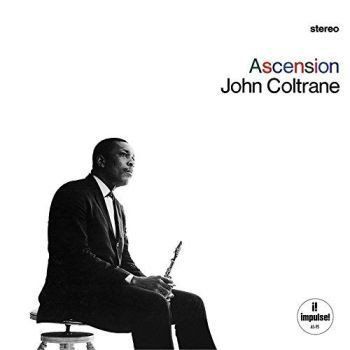
To quote Albert Ayler; "John was like a visitor to this planet. He came in peace and he left in peace; but during his time here, he kept trying to reach new levels of awareness, of peace, of spirituality. That's why I regard the music he played as spiritual music - John's way of getting closer and closer to the Creator."
Ascension soon grabs you with an almost shocking kaleidoscope of noise. A jumbled up rush hour city before or after lockdown, an intensely hurried compulsive brain going into overdrive, phrase upon phrase, note upon note; it's not unknown for the casual listener to be frightened, upset, disgusted even by what presents itself as music. It could be on a par with the premier performance of Stravinsky's Rite Of Spring in 1913, where most of the Parisian crowd lost patience completely, walked out and caused an uproar, a riot even, as history books tell it.
When I first bought it, well, let me just say it was my first introduction to a colossal seismic shift in my appreciation of jazz. An introduction to an awakening of so called 'free-jazz'. I had total respect for Coltrane's music already, having previously digested his album A Love Supreme, Blue Train and his earlier work with Miles Davis. I remember first hearing the masterpiece A Love Supreme and being taken aback by the vocal coming in on the title refrain. What 'A Love Supreme' did of course was introduce me to a colossal presence, a once heard never forgotten piece of music. It changed my appreciation of jazz forever and set me in good stead for the further exploration of the music including Ornette Coleman, Sun Ra, Pharaoh Sanders, Albert Ayler and Alice Coltrane herself, still all waiting to be heard at that point. What it didn't prepare me for was Ascension.
Once I remember playing it rather too loudly in my bedroom and hearing a voice saying exasperatingly, "what on earth is that?!", I replied jokingly, "it's not of this earth!" I still feel blessed that my parents did this with good humour and a willingness to listen.
It was like an exploration of an unknown wilderness, a first visit to a capital city, the first time you fall over and smash your head against the floor, a waking nightmare, a step back from the world and a giant leap into it, a visionary to learn from and continue to investigate further.
Within these walls of chaos comes shining glimpses of purity and with continued listening, reveal moments of magical elevation which might not have been heard previously. Some famous Coltrane associates ingeniously settle back into the thematic groove, dismantling it and disconnecting, giving space and and some air within its avant-garde explorations, among them Elvin Jones, Art Davis, McCoy Tyner and Freddie Hubbard.
Sometimes it's like being drawn into a freeform after hours jam session at the famous Birdland club with every player given free reign at express themselves at the same time, getting higher and higher but then always coming back to regain consciousness after the breath itself is no longer in the room.
Ascension then, is to some, a slightly annoying neighbour to the more famous A Love Supreme album released later in the same year. To others it's a close companion and represents another spiritual dimension to our busy and chaotic lives. Above all Ascension was and still is, ahead of it's time, in fact you can almost say it transcends time.
(Edition 1 of Ascension was released in 1965; and later, after the album was already officially released, Coltrane listened back to the first takes of Ascension in the studio and asked if the record could be changed and cut again using a different recording take, now known as Edition 2, this was released in 1966 with a slightly different feel.)
Coltrane's philosophy was now growing immensely, learning and gaining a truth in ones own spiritual path. This can be heard in multitudes from here on in and with the help of Alice Coltrane, both forging an influence and a higher consciousness that is still absorbed by many today.
If you haven't yet heard Ascension then I would advise anyone to play it with open ears and an even more open mind. If at first it seems too much then feel free to stop it, but then try it again later. If the second time it still creates tension then why not play Blue Train to maybe calm the nerves, followed by the masterpiece of A Love Supreme. Then once again now being in the groove, play it again and allow the album to run its course. If by the end and you've got the time then play it again, now you'll be accustomed to the rise and fall of mayhem, the subtle changes which announce the regaining of sanity. You'll maybe pick out a line of notes from one individual player that once heard will remain a key point in acknowledging of the records creative power and 'ascension' to a higher purity of presence. Now place the album in pride of place among Coltrane's work and know it's there when you need it to awaken the appreciation of a challenging creative force of nature. Another gift from John Coltrane to try and understand ourselves amidst the chaos of the world.
There are moments in each of his later albums where you can vividly sense that he was almost aware of his mortality and soon his life in this form would be taking it's last breath. Coltrane passed away at only 40 years of age in 1967.
“There is never any end,” Coltrane wrote in the 1965 liner notes for Ascension. “There are always new sounds to imagine: new feelings to get at. And always, there is a need to keep purifying these feelings and sounds so that we can really see what we’ve discovered in its pure state. So that we can see more clearly what we are. In that way, we can give to those who listen, the essence–the best of what we are. But to do that at each stage, we have to keep on cleaning the mirror.”